#fad300 Color Information
In a RGB color space, hex #fad300 is composed of 98% red, 82.7% green and 0% blue. Whereas in a CMYK color space, it is composed of 0% cyan, 15.6% magenta, 100% yellow and 2% black. It has a hue angle of 50.6 degrees, a saturation of 100% and a lightness of 49%. #fad300 color hex could be obtained by blending #ffff00 with #f5a700. Closest websafe color is: #ffcc00.
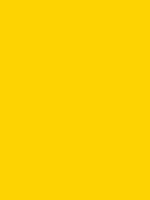
● #fad300 color description : Pure (or mostly pure) yellow.
#fad300 Color Conversion
The hexadecimal color #fad300 has RGB values of R:250, G:211, B:0 and CMYK values of C:0, M:0.16, Y:1, K:0.02. Its decimal value is 16438016.
| Hex triplet | fad300 | #fad300 |
|---|---|---|
| RGB Decimal | 250, 211, 0 | rgb(250,211,0) |
| RGB Percent | 98, 82.7, 0 | rgb(98%,82.7%,0%) |
| CMYK | 0, 16, 100, 2 | |
| HSL | 50.6°, 100, 49 | hsl(50.6,100%,49%) |
| HSV (or HSB) | 50.6°, 100, 98 | |
| Web Safe | ffcc00 | #ffcc00 |
| CIE-LAB | 85.461, -2.029, 85.879 |
|---|---|
| XYZ | 62.72, 66.915, 9.612 |
| xyY | 0.45, 0.481, 66.915 |
| CIE-LCH | 85.461, 85.903, 91.354 |
| CIE-LUV | 85.461, 34.678, 90.556 |
| Hunter-Lab | 81.802, -6.292, 50.294 |
| Binary | 11111010, 11010011, 00000000 |
Color Schemes with #fad300
Alternatives to #fad300
Below, you can see some colors close to #fad300. Having a set of related colors can be useful if you need an inspirational alternative to your original color choice.
#fad300 Preview
This text has a font color of #fad300.
<span style="color:#fad300;">Text here</span>This paragraph has a background color of #fad300.
<p style="background-color:#fad300;">Content here</p>This element has a border color of #fad300.
<div style="border:1px solid #fad300;">Content here</div>.text {color:#fad300;}.background {background-color:#fad300;}.border {border:1px solid #fad300;}Shades and Tints of #fad300
A shade is achieved by adding black to any pure hue, while a tint is created by mixing white to any pure color. In this example, #0f0c00 is the darkest color, while #fffefa is the lightest one.
-
#0f0c00
#0f0c00rgb(15,12,0) -
#221d00
#221d00rgb(34,29,0) -
#362d00
#362d00rgb(54,45,0) -
#493e00
#493e00rgb(73,62,0) -
#5d4f00
#5d4f00rgb(93,79,0) -
#715f00
#715f00rgb(113,95,0) -
#847000
#847000rgb(132,112,0) -
#988000
#988000rgb(152,128,0) -
#ac9100
#ac9100rgb(172,145,0) -
#bfa100
#bfa100rgb(191,161,0) -
#d3b200
#d3b200rgb(211,178,0) -
#e6c200
#e6c200rgb(230,194,0) -
#fad300
#fad300rgb(250,211,0)
-
#ffda0f
#ffda0frgb(255,218,15) -
#ffdd22
#ffdd22rgb(255,221,34) -
#ffe036
#ffe036rgb(255,224,54) -
#ffe349
#ffe349rgb(255,227,73) -
#ffe65d
#ffe65drgb(255,230,93) -
#ffe971
#ffe971rgb(255,233,113) -
#ffec84
#ffec84rgb(255,236,132) -
#ffef98
#ffef98rgb(255,239,152) -
#fff2ac
#fff2acrgb(255,242,172) -
#fff5bf
#fff5bfrgb(255,245,191) -
#fff8d3
#fff8d3rgb(255,248,211) -
#fffbe6
#fffbe6rgb(255,251,230) -
#fffefa
#fffefargb(255,254,250)
Tones of #fad300
A tone is produced by adding gray to any pure hue. In this case, #878473 is the less saturated color, while #fad300 is the most saturated one.
-
#878473
#878473rgb(135,132,115) -
#908a6a
#908a6argb(144,138,106) -
#9a9160
#9a9160rgb(154,145,96) -
#a39757
#a39757rgb(163,151,87) -
#ad9e4d
#ad9e4drgb(173,158,77) -
#b7a543
#b7a543rgb(183,165,67) -
#c0ab3a
#c0ab3argb(192,171,58) -
#cab230
#cab230rgb(202,178,48) -
#d4b926
#d4b926rgb(212,185,38) -
#ddbf1d
#ddbf1drgb(221,191,29) -
#e7c613
#e7c613rgb(231,198,19) -
#f0cc0a
#f0cc0argb(240,204,10) -
#fad300
#fad300rgb(250,211,0)
Color Blindness Simulator
Below, you can see how #fad300 is perceived by people affected by a color vision deficiency. This can be useful if you need to ensure your color combinations are accessible to color-blind users.